Vintage Londoner with retrocentric tastes. Interested in the uncommon,artistic,cultural and visual life of this old tart of a city and its tawdry glamour. Tinctured with cocktails, swear words and the odd rant. I'm friendly but bolshy and my opinions are honest and sponsor-free. P.R and marketing types please see 'About Me'. redlegsinsoho@me.com


I have railed against ‘Whoreditch’ and the Max Wall impersonators that seem to teem all over it (skinny jeans, ballet pumps, birds-nest hair) so much I know I am becoming tedious. However I am only really picking at one one layer of the East End Onion. There are other peelings that annoy me: the BNP-voting lumpen elements of Plaistow, the monoculturalism of bits of Tower Hamlets and the effluential Dalston. At the same time there are tasty bits of the Onion
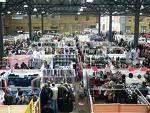
On Sunday we ambled over to Spitalfields market. I know it should make me spit to think of what has happened to the place but I am more than aware that the only way to save a market or it’s architecture is to gentrify and artify it. The alternative is the bulldozer and the advance of more belligerent office buildings. It was the same with Borough Market which was saved by posh Spanish cheeses and pies that cost a tenner. So if Spitalfields is overrun by Hoxton Twatkids, tourists and divvy trendy mums with children called Otis so be it. But is there a reason for creatures like me, and possibly like you to traipse over there?
Well yes. If only because it is something to do, which can involve quite painless transport links. It has to be said also that there is plenty to eat and drink. It is most definitely good for food. We had brunch at Giraffe, the chain that promises ‘world food and music’ and does actually provide a very tasty Mexican breakfast. We discovered this just as the chain cannily went for the yummy mummy rah demographic and started to give balloons out. Every Giraffe is now spoilt by babies, and babies do spoil lunch, and dinner, and everything else for everyone who…well doesn’t have their own baby. However we got there early enough to miss the first baby ‘surge’. Shame that human babies are so ugly compared to other infant mammals. Now if they all looked like puppies or kittens or baby meerkats the screeching and screaming and dribbling might just be ok.
The main market was largely full of stuff of no interest, there seemed to be a lot of Chinese people selling pared down Vivien Westwoodesque jackets and cannibalised tweed seemed particularly popular as a material. There were some interesting (and if I recall long-established) stalls selling paperbacks. The shops around the market were full of up-market tat. Dolly Dagger looked to have some ok frocks and undies although a little frou frou for me. The bars and restaurants looked expensive and banal. A drink at the Ten Bells would be a better and more atmospheric option than any of the bars we saw.
On Sunday however, across the road from the main market heading in the direction of the Truman Brewery is the Sunday market. I prefer this inordinately even though it is the homeland of the ironic porkpie hat. It reminds me of Design Festa, the huge market/art exhibition/happening/concert I used to go to in
Did I buy anything? Surely the real mark of a market is this? Well no, but that was more down to my state of advanced boracity. If I had more than basic beer money I would have. The sellers I was taken by were:
In the main market a jeweller called 'Eat Your Feet' with some witty plasticky jewellery using vintage and pop-culture motifs. In the Sunday market, food and Balkan beats aside, I liked Dan Hilliers stall of prints of his Ernst-like surreal illustrations and designs. Victorian octopus people rule. A stall called Orizu was selling the most wonderful 30’s and 40’s inspired hats, really superb and good value at £120 -£180 (if you think that is expensive have a look at how much hand made millinery costs). She wasn’t giving out cards and does not have a website and would not let me take a photograph. But hopefully she will stick it out because her tiles were absolutely lovely.
I’m referring to the Second World War. There is a lot of it about, and a lot of post-war austerity in television dramas and on the pages of novels. Is this because we need to be reminded during times of recession that things can be so much worse? It also occurred to me that this particular period has a peculiar resonance for my own, post baby-boomer pre generation-x demographic, are people my age behind some of this interest?
The baby-boomer generation were often children during the war; if not their own parent’s lives were often defined by it. I have always thought that the selfish, hedonistic, escapist sixties were partially fuelled by an “I am bloody sick to death of hearing about the bloody war” mentality. Who can blame our parents? How on earth were they ever going to compete with the toughness, suffering and downright chutzpah of their parents. After all how do you rebel against a generation who repelled the Nazis? The only answer is to reject the world they fought for, even though it may have provided the only kind of culture in baby boomers could freak out and drop out.
It was different for my peers and I. Not only were the sixties our parents’ era, and therefore profoundly old fashioned but their generation were busy making terrible mistakes in the seventies and eighties. I never felt I had much to live up to in terms of my parents generation. But what really makes a difference is that perennial generation jump that engenders a fondness between grandparents and grandchildren. Our grandparents all came from that Wartime generation, some even recalled the Great War. We’d hear first about the exoticism of wartime
In the 70’s the remnants of the war were still also still around. The area next our tenement block (now part of the nine elms complex) was a bomb site. There were no ruins, but you’d still collect shiny bits of shrapnel and the odd bit of casing. There were other signs, the local little brick terraces had little low walls you walked along, but they weren’t walls, just the stone bases that had once supported railings. Old enamel street signs were peppered with singed holes and many terraces still had gaps or houses were shored up with huge wooden planks.
There are many retrophiles who revel in the romance, pugnaciousness and sheer style in the face of disaster that the home front represents. But I have always preferred the thirties. I suspect this is because I know that it is the hopes of the 30’s and the wish to preserve some elements of that glamourous but unstable world that drove my grandparents to persevere through bombs and barrages.
I can understand the enthusiasm for wartime music and fashion. Laurence Llewellyn Jones of all people, in promoting the 40's as the style decade for some banal programme made the very pertinent point that things and people often looked great despite austerity, squalor and suffering. Admittedly most newsreels show grubby grim shabby people but lipstick still found itself being worn, hair was permed. For me part of the glamour was the role of women as firefighters, munitions workers, radio operators or the tough heart of the home front. It seems more appealing to look back at them when you consider the vapid, thin, sex-doll image that seems to epitomise the ideal of women now. The glamorous stereotype of the war had nails, resources and indomitability.
But I still prefer the pre-war 30's stylistically and musically, I would have hated to have lived through the war, I lived through part of it, second hand through my grandparents and generally speaking it sounded horrific.


I haven’t been to Notting Hill much in the last couple of decades. It really isn’t my idea of
Initial impressions were not good. The market teemed with European language students and those stalls and shops which are the sign of a market gone wrong proliferated. You know, the ethnic tat/faux craft stalls which first infected
However I did also find things to like, particularly that a few old fashioned traders were still hanging on. I found one vintage jewellery dealer with decent stock at decent prices. Towards the lower end, where it felt like it was still a proper market (less tourists, fruit and veg on sale) the food smelt good. For me however the best bit of the market was not on

Going back to the start of this blog though, the area in parts does not feel like
There is probably a place for a bit of the Home Counties laced with an edge of Eurotrash glamour in


I had to include this portrait of the artist because he is such a dapper chap!
My lack of blogs recently is partially explained by a trip to the Isle of Man, even I didn’t feel the need to drag my laptop with me, although I admit for a nanosecond I was tempted. I was going to attend, what turned out to be a charming wedding. However as the Isle of Man is a rather longer trip than the usual be-hatted excursion to Surrey we had decided to stay for 3 nights. As you can imagine, small islands in the Irish Sea are not Red Leg’s native habitat. I am quite literally a fish out of any water that is not redolent of the Thames: grey and murky. I’d also never been to any of the Channel Isles so had no idea what to expect, except hopefully good fish and chips and salty characters, a kind of Doctor Martin but in the Irish Sea.
Port Erin without the sea.
The first thing that was appealing was the journey. I’m a long haul traveller having spent an extended period in the Far East. Thus flying on a small aeroplane with propellers had a charm of its own. I had to walk on the runway and climb up stairs into the aeroplane which was redolent of Grace Kelly boarding a plane to Monaco, apart from the fact it was Gatwick and the man boarding before me was wearing a very peculiar wig. Arrival was fun, a blustery runway right on the edge of the Island and a bijou sixties airport that we were in and out of in a jiffy.
We were staying at what I think was the far West of the Island in a little place called Port Erin. It rapidly emerged that being out of season nearly everything was closed and a 30-minute walk revealed all the on offer including it's strangely reticent seagulls. Mind you I am used to Cornwall, the home of the hoodies of the seagull world. Our hotel, 'The Falcon’s Nest' was a curious establishment, Gladstone had once stayed there and it had obviously once been a very imposing building. Like most hotels it had been cut up, ceilings lowered and fire doors added. It however had a breakfast room that looked like a grand Georgian drawing room with high ceilings and a frieze of plaster daffodils. The service was eccentric but friendly. The place did however have the most amazing views of the beach from the hotel bar and a pint of O'Kells beer and a sunset are not the worst ways to see an evening in.
Sorry dahling, no agent no pose...
Soon it transpired that Port Erin was not the quiet spot we imagined, certainly not on that weekend. Quite apart from the wedding party, there was some kind of world viola symposium and the place was full of nerdy foreigners with big instruments. Additionally it transpired that the pub run by the hotel was the social hub for the area’s youth. Unfortunately it was also right under our otherwise large comfortable room.
This apart the Island was a curious place, more redolent of the West of the country rather than the North and very proud. I liked the pride the locals had. Most things were prefixed by the designation ‘Manx’: Manx sausages, Manx breakfasts, Manx cream and on the final day, as a bus driver proudly announced "fine Manx weather". This consisted of horizontal rain and a gale. Curiously the Island didn’t seem particularly well set up for tourism, this was evinced by the available souvenirs: rubbish fridge magnets and fudge or toffee. The local speciality was ‘Manx Knobs’, the most original thing about them being their name (they are basically a type of humbug). I did consider bringing back some of the rather delicious Manx kippers but baulked at putting smoked fish in my hand luggage.
Did I say there was a wedding?
Wedding aside, the high points of the trip were a journey on a steam train to Douglas, and in Douglas a guided tour of the House of Keys (the Groom being a member of this august institution). The train journey was very pretty and spring-like. I noted the response of the local Manx animal population to the train. Pheasants ran around in circles, grouse stuck their heads up and looked cross, rabbits hid ineffectively, their ears sticking up behind hillocks, horses chased us and the only Manx cat I saw promptly showed us it's (tail-less) derriere. Ooooo! I've come over all Country File. Maybe that makes up for asking a Manx man about the land mass in the distance (turned out to be Ireland, duh!). Despite my general rural ignorance I liked the place. I think a touch of seagull coaching in the summer may be called for.